Commercial Hot-Side Equipment Guide
Facility guidance for gas, electrical, water, and ventilation scope: what to observe, when to escalate, and how to prepare a clear commercial service request.
Commercial facilities only · Serving North and Central Texas since 1986
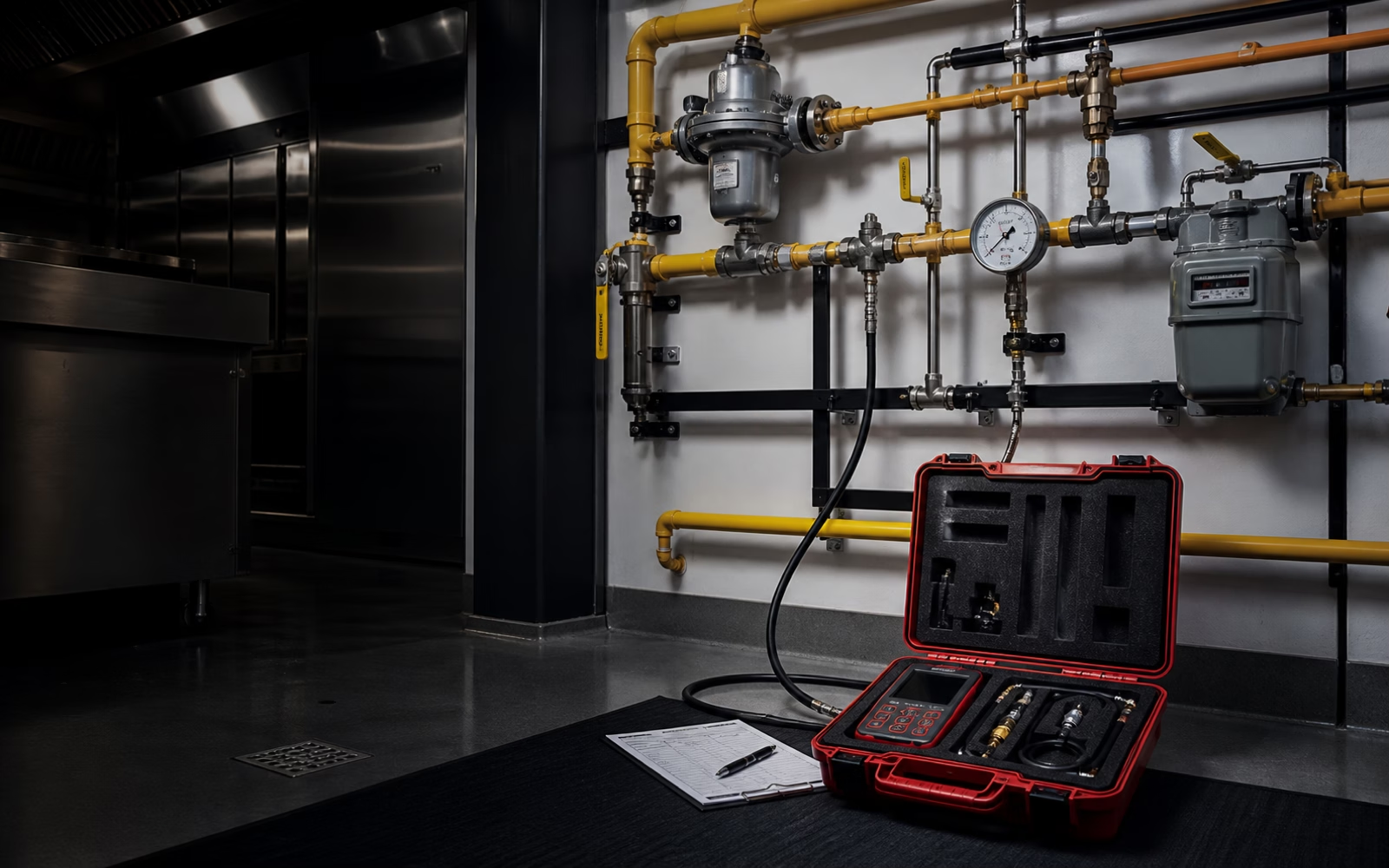
For restaurant, institutional kitchen, grocery foodservice, and commercial operations teams. This guide focuses on observation, communication, safe escalation, and commercial service preparation. It does not replace site safety rules, manufacturer instructions, licensed diagnosis, or emergency services.
A commercial facility problem is rarely limited to the failed component. It can affect customers, employees, tenants, food or product protection, sanitation, production, access, security, and the approval chain that allows a technician to proceed. The first objective is not to guess at a repair. It is to establish what is happening, where it is happening, what is at risk, and what the facility has already done under its approved procedures.
For commercial hot-side cooking and foodservice equipment, a clear work order helps dispatch match the trade and urgency to the actual condition. Vague descriptions such as “not working” or “needs service” slow triage. A useful request identifies the asset or area, the observed symptom, the time pattern, the operational consequence, and the site conditions the provider must know before arrival.
Use observation and existing facility records. Do not remove guards, open energized equipment, override safeties, enter restricted areas, reset equipment repeatedly, handle refrigerant, work on gas systems, or perform tasks outside your training and authority.
If there is fire, smoke, a suspected gas release, an electrical hazard, a structural concern, flooding near energized equipment, or an immediate threat to people, follow the site’s emergency plan and contact emergency services as required before ordinary repair dispatch.
A strong service request gives the dispatcher and technician enough context to prepare without claiming a diagnosis. Include the site name and address, onsite contact, best callback number, requested priority, affected operation, asset identity, observed condition, safe access window, and the approval path for work beyond the initial not-to-exceed limit.
For multi-site work, include the platform work-order number and the required check-in, photo, quote, status, and closeout steps. If the location has roof access, escorts, keys, alarm procedures, loading restrictions, food-safety controls, lockout rules, permits, or special PPE, place those requirements in the work order before the technician arrives.
The service visit should connect the reported symptom to the actual equipment or facility condition. Depending on verified scope, that may include inspection, testing, identification of the failed or suspect component, documentation of contributing conditions, a repair recommendation, parts or follow-up requirements, and a clear explanation of what is operating when the technician leaves.
A complete closeout separates confirmed findings from assumptions. It should record the asset and location, arrival condition, work performed, current operating status, photos or readings required by the customer, any remaining limitation, and the next approved action. When the same complaint returns, those records make trend review possible.
Preventive maintenance should be specific to the equipment, environment, runtime, occupancy, manufacturer guidance, and customer requirements. A generic checklist is not proof that every relevant condition was inspected or that an unexpected failure cannot occur.
Facility staff should follow only approved operating and safety procedures within their training and authority. Record observations and make the area safe under the site plan; do not bypass controls, open hazardous equipment, or make an unverified repair.
Urgency should reflect risk to people, active property damage, sanitation, product, critical temperature, production, customer access, or the ability to operate—not simply the age of the work order. Explain the operational consequence so dispatch can triage accurately.
Include the confirmed asset, condition found, work completed, current status, relevant readings or photos, remaining risk or limitation, and any quoted or recommended follow-up. Customer platform and invoice requirements may add other fields.
For an active commercial emergency involving gas, electrical, water, and ventilation scope boundaries, call EPS live dispatch. For planned investigation, recurring problems, or a multi-location program, send the asset, history, access, approval, and operational details through the commercial service request path.
Request Commercial Service Review Commercial Hot-Side Equipment capabilities