Commercial Plumbing Guide
Commercial operations guidance for gas odor and commercial gas-piping escalation: triage, provider coordination, approval paths, and repeat-call review.
Commercial facilities only · Serving North and Central Texas since 1986
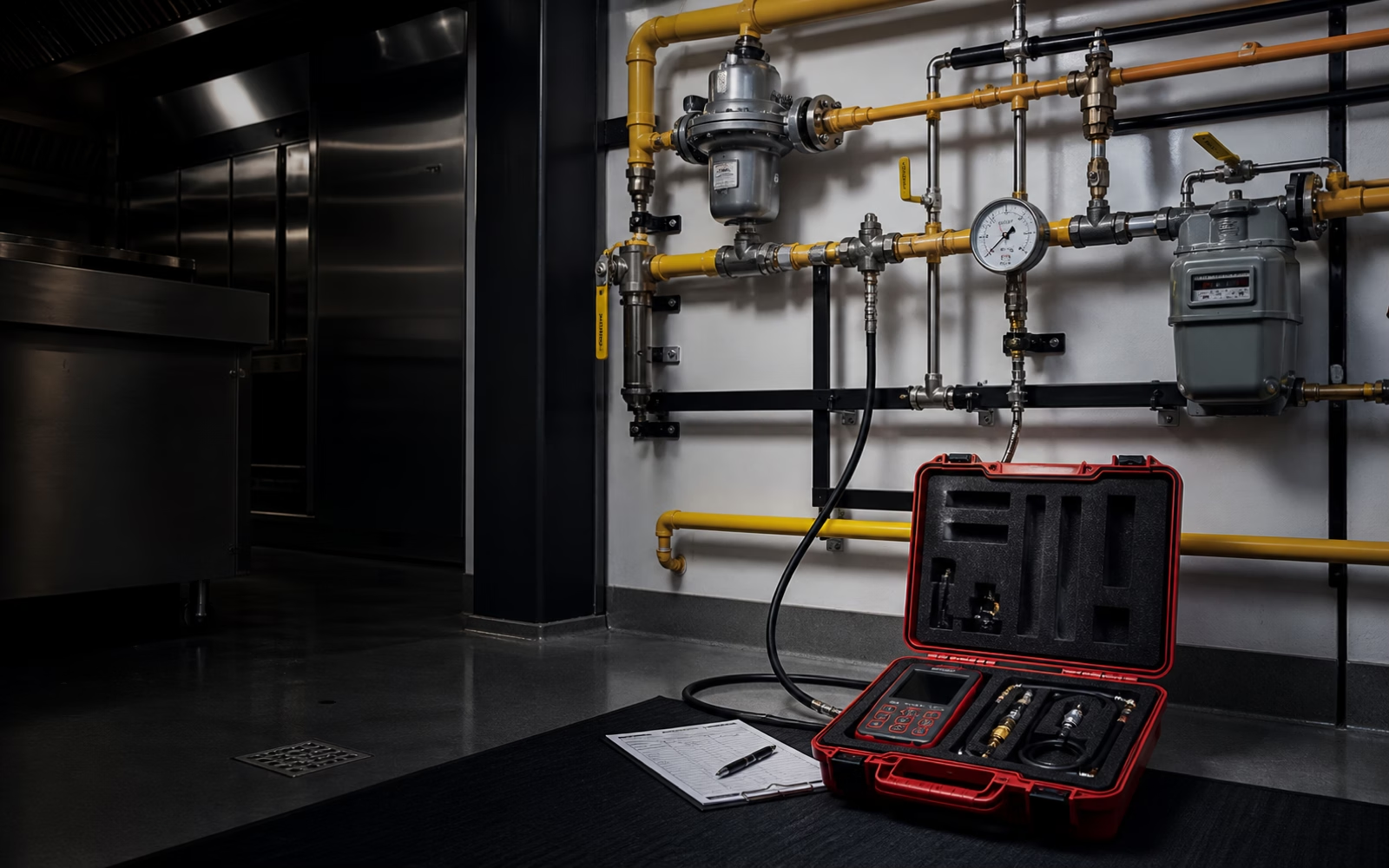
For facility managers, multi-site operators, and commercial property teams. Start with the business consequence. A precise description of the affected area, asset, people, product, and operating window gives the response team a usable priority instead of a vague alarm. This guide supports safe escalation and commercial service preparation; it does not replace site safety rules, manufacturer instructions, licensed diagnosis, or emergency services.
A commercial service decision rarely belongs to one component. Work related to gas odor and commercial gas-piping escalation can influence customers, employees, tenants, sanitation, product protection, production, access, and the approval chain that authorizes work. Establish the operational context before anyone speculates about a repair or commits to a plan.
For commercial plumbing and drainage systems, the response record should make the affected asset, observed symptom, time pattern, business consequence, and site constraints clear enough for another facilities leader to understand the decision later.
Use observation and existing facility records. Do not remove guards, open energized equipment, override safeties, enter restricted areas, reset equipment repeatedly, handle refrigerant, work on gas systems, or perform tasks outside your training and authority.
If there is fire, smoke, a suspected gas release, an electrical hazard, a structural concern, flooding near energized equipment, or an immediate threat to people, follow the site’s emergency plan and contact emergency services as required before ordinary repair dispatch.
A strong request identifies the site, exact asset or area, onsite contact, callback number, requested priority, current operating effect, safe access window, and authorization path. Include the work-order number and not-to-exceed limit when they apply.
For multi-site work, state the required check-in, photo, quote, status, and closeout steps. Clear instructions let dispatch coordinate the provider, location, and approval owner without relying on informal knowledge that may not be available after hours.
The visit should connect the reported symptom to a verified condition. The closeout should identify the asset, arrival state, findings, work performed, current operating status, required readings or photos, remaining limitations, and the next approved action.
Complete documentation protects continuity between dispatch, the technician, facility leadership, accounts payable, and the next service provider. Confirmed facts should remain distinct from assumptions and future recommendations.
Preventive maintenance should reflect the actual equipment, environment, runtime, occupancy, manufacturer guidance, and customer requirements. A generic checklist is not proof that every relevant condition was inspected or that an unexpected failure cannot occur.
Facility staff should follow only approved operating and safety procedures within their training and authority. Record observations and make the area safe under the site plan; do not bypass controls, open hazardous equipment, or make an unverified repair.
Urgency should reflect risk to people, active property damage, sanitation, product, critical temperature, production, customer access, or the ability to operate—not simply the age of the work order. Explain the operational consequence so dispatch can triage accurately.
Include the confirmed asset, condition found, work completed, current status, relevant readings or photos, remaining risk or limitation, and any quoted or recommended follow-up. Customer platform and invoice requirements may add other fields.
For an active commercial emergency related to the systems or operations discussed here, call EPS live dispatch. For planned investigation, recurring problems, readiness reviews, or a multi-location program, send the asset, history, access, approval, and operational details through the commercial service request path.
Request Commercial Service Review Commercial Plumbing capabilities